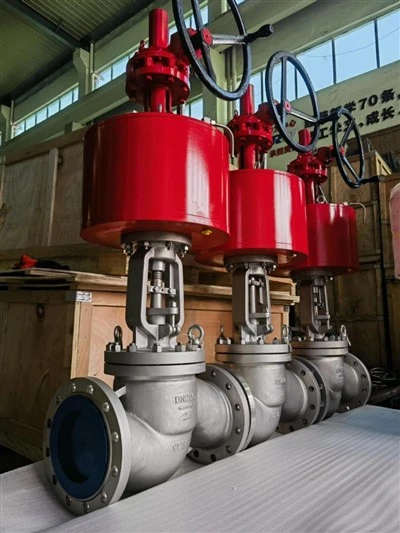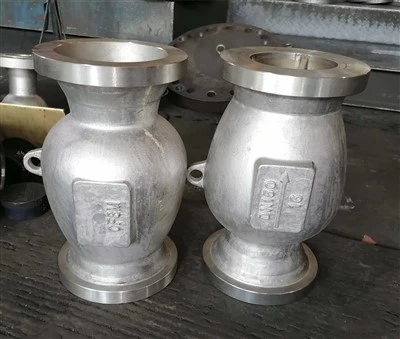


Butterfly Check Valve is an industrial valve manufactured for pipeline systems to prevent reverse flow and maintain reliable one-way fluid control.
Technical Specifications
|
Parameter |
Specification |
|
Valve Type |
Butterfly Check Valve / Dual Plate Check Valve / Wafer Check Valve |
|
Design Standard |
API 594 / ASME B16.34 / Customer Specifications |
|
Size Range |
DN50-DN1500 (2"-60") / Customized Sizes Available |
|
Pressure Rating |
PN10-PN40 / ASME Class 150-Class 300 |
|
End Connection |
Wafer / Lug / Flanged |
|
Body Materials |
Carbon Steel / Stainless Steel / Ductile Iron / Customized Materials |
|
Disc Materials |
Stainless Steel / Duplex Stainless Steel / Other Materials Available |
|
Sealing Materials |
EPDM / NBR / PTFE / Customized Sealing Materials |
|
Installation |
Horizontal or Vertical Installation According to Application Requirements |
Key Features
Dual Plate Disc Design
Two semi-circular discs rotate around a central shaft and respond to flow conditions for automatic opening and closing.
Heavy-Duty Valve Body Construction
Robust valve body construction provides high rigidity for large-diameter pipeline applications.
Spring-Assisted Dual Plate Assembly
Spring-assisted dual plate assembly provides smooth movement and stable valve response during operation.
Reduced Water Hammer Impact
Dual plate movement helps reduce pressure impact during reverse flow closure and supports smoother pipeline operation.
Low Flow Resistance Design
Streamlined flow passage helps minimize pressure loss and improve fluid transfer efficiency.
Non-Slam Closing Performance
The dual plate design uses short disc travel and spring-assisted closing to reduce reverse velocity and minimize water hammer effects in pipeline systems.

Working Principle & Valve Design
A butterfly check valve operates through two semi-circular discs mounted on a central shaft.
During normal flow:
- Fluid pressure pushes the discs open.
- The streamlined disc movement allows fluid passage with reduced pressure loss.
- Spring assistance helps maintain stable valve response.
During reverse flow:
- The flow direction changes.
- The discs automatically return to the closed position.
- Fast closing action helps reduce reverse velocity and pressure impact.
The dual plate structure provides a compact alternative to traditional swing check valves, especially where installation space and fast response are important.
Typical Applications
Water Supply & Treatment Systems
Used in water transmission pipelines, pumping stations, and treatment facilities to prevent reverse flow and protect system equipment.
Pump Outlet Pipeline Protection
Installed at pump discharge pipelines to prevent backflow during pump shutdown and improve system safety.
Industrial Process Pipelines
Suitable for manufacturing, chemical, and process systems requiring reliable one-way flow control.
Power Plant Auxiliary Systems
Applied in cooling water, circulating water, and utility pipeline systems.
HVAC & Building Water Systems
Used for chilled water, heating water, and circulation systems requiring compact valve installation.
Material & Customization Options
Valve Body Materials
Available materials include:
- Carbon Steel
- Stainless Steel
- Ductile Iron
- Low Temperature Carbon Steel (LTCS)
- Duplex Stainless Steel
- Alloy Steel
Material selection depends on pressure, temperature, corrosion requirements, and application conditions.
Disc & Shaft Materials
Disc and shaft materials can be selected according to:
- Corrosion resistance
- Mechanical strength
- Operating temperature
- Fluid compatibility
Sealing Materials
Available sealing options include:
- EPDM
- NBR
- PTFE
- Other customized sealing materials
Connection Options
Configurations include:
- Wafer type
- Lug type
- Flanged type
Surface Treatment
Protection options include:
- Epoxy coating
- Anti-corrosion coating
- Customer-required surface treatment
Inspection & Testing
Butterfly check valves are inspected during machining, assembly, and final testing. Inspection focuses on critical components including the valve body, dual plates, shaft assembly, and sealing surfaces.
Material & Component Inspection
Material identification and certificates are checked for pressure-containing parts such as valve bodies, discs, and shafts to maintain material traceability.
Machining & Dimensional Inspection
Key dimensions including flange connections, disc alignment, shaft position, and sealing surface tolerances are inspected against approved drawings.
Assembly Inspection
The dual plate mechanism, spring assembly, shaft movement, and sealing contact areas are checked during assembly to verify disc movement and closing performance.
Pressure & Leakage Testing
Hydrostatic testing verifies body strength, while seat leakage testing checks sealing performance of the dual plate assembly.
Final Inspection & Documentation
Inspection records, pressure test reports, and material certificates can be provided according to project requirements.
Manufacturing Process
Butterfly check valves are produced through controlled manufacturing procedures including:
- Raw material inspection
- Casting or forging verification
- CNC machining of body and disc components
- Assembly inspection
- Hydrostatic pressure testing
- Leakage testing
- Final dimensional inspection
- Export packaging
Each valve is inspected before shipment according to project requirements.
Manufacturing Capability
Highly Experienced
Since 1997, PORO has manufactured industrial valves for water treatment, power generation, oil & gas, and industrial process applications. Our experience covers valve machining, assembly, pressure testing, inspection, and export preparation for international projects.
Quality Control & Inspection
Quality control covers incoming material checks, dimensional verification, machining checks, assembly inspection, and final product inspection before shipment.
Comprehensive Valve Manufacturing Range
Manufacturing capabilities cover check valves and other industrial valves including gate valves, globe valves, ball valves, butterfly valves, slab gate valves, and forged valves.
Multi-Material & Standard Capability
Supporting carbon steel, LTCS, stainless steel, duplex stainless steel, and alloy steel production according to ANSI, DIN, BS, JIS, and GB requirements.
Packaging & Delivery
Valve Protection During Transportation
Valves are protected with flange covers, sealing surface protection, and internal cleaning to prevent damage and contamination during shipment.
Internal Component Protection
Discs, shafts, and sealing areas are protected to maintain product condition during handling and transportation.
Export Wooden Case Packaging
Valves are packed in suitable wooden cases or customized export packages according to valve size and shipment requirements.
FAQ
Q: What is the difference between a butterfly check valve and a swing check valve?
A: A butterfly check valve uses two plates with a compact axial movement design, while a swing check valve uses a single disc rotating around a hinge. Dual plate designs generally provide faster closing response and require less installation space.
Q: What is the difference between wafer and lug butterfly check valves?
A: Wafer butterfly check valves are installed between two pipe flanges and provide a compact solution for space-limited applications. Lug butterfly check valves use lug connections, allowing easier installation and maintenance for certain pipeline configurations. The selection depends on pipeline design and project requirements.
Q: Can butterfly check valves be installed vertically?
A: Yes, butterfly check valves can be installed in vertical pipelines when the valve design and operating conditions are suitable.
The installation direction, flow direction, spring design, and application requirements should be considered to ensure proper disc movement and reliable closing performance.
Q: What is the pressure rating of a butterfly check valve?
A: The pressure rating of butterfly check valves depends on valve design, materials, and application requirements.
PORO butterfly check valves are available in pressure ratings including PN10-PN40 and ASME Class 150-Class 300. Customized pressure ratings can be provided according to project specifications.
Q: How often should a butterfly check valve be inspected or maintained?
A: Inspection and maintenance frequency depends on operating conditions, fluid characteristics, and application requirements. Regular checks of disc movement, sealing performance, and connection conditions help maintain reliable valve operation and extend service life.
Q: What causes a butterfly check valve to fail?
A: Common causes of butterfly check valve problems may include incorrect valve selection, unsuitable material selection, improper installation, excessive pressure conditions, or foreign particles affecting the sealing area.
Selecting the correct valve size, materials, and installation method helps reduce operational issues.
Q: What is the difference between a butterfly check valve and a non-slam check valve?
A: A butterfly check valve with a dual plate design is often considered a non-slam check valve because its spring-assisted closing mechanism helps reduce reverse flow velocity and minimize pressure shock during closure.
The final performance depends on valve design, operating conditions, and pipeline requirements.
Q: What quality documents can be provided with butterfly check valves?
A: Quality documents such as Material Test Certificates (MTC), pressure test reports, leakage test reports, dimensional inspection reports, and final inspection records can be provided according to project requirements.
Hot Tags: butterfly check valve, China butterfly check valve manufacturers, suppliers, factory, Axial Flow Check Valve, Butterfly Check Valve, check valve, Dul Plate Wafer Type Check Valve, Single Plate Wafer Type Check Valve, Swing Type Check Valve