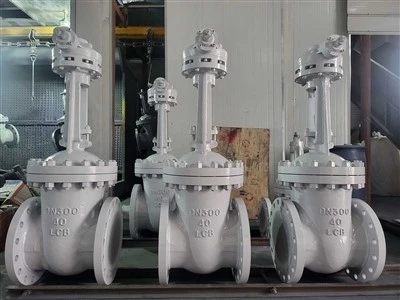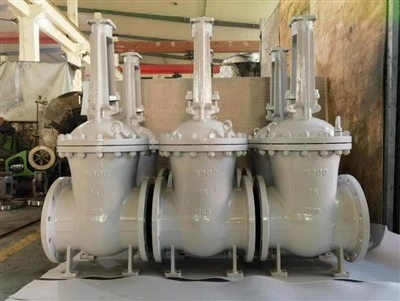


Slab Gate Valve is a full-bore pipeline isolation valve designed to control and shut off flow in oil & gas, petrochemical, and industrial pipeline systems.
Technical Specifications
|
Parameter |
Specification |
|
Product Type |
Slab Gate Valve / Pipeline Gate Valve |
|
Design Type |
Through-Conduit Slab Gate Valve / Flat Gate Design |
|
Size Range |
NPS 2"–48" (DN50–DN1200) |
|
Pressure Rating |
ASME Class 150 – Class 2500 / PN16 – PN420 |
|
Design Standard |
API 6D / ASME B16.34 / Other applicable project specifications |
|
Face-to-Face Dimension |
ASME B16.10 |
|
End Connection |
Flanged Ends / Butt Weld Ends |
|
Flange Standard |
ASME B16.5 / ASME B16.47 |
|
Body Material |
Carbon Steel / Low Temperature Carbon Steel / Stainless Steel / Duplex Stainless Steel / Alloy Steel |
|
Trim Material |
Stainless Steel / Alloy Materials According to Service Conditions |
|
Seat Design |
Floating Seat / Fixed Seat / Self-Relieving Seat Configuration |
|
Sealing Type |
Metal-to-Metal Sealing / Soft Seat Sealing Options |
|
Operation |
Handwheel / Gear Operator / Pneumatic Actuator / Electric Actuator |
|
Temperature Range |
According to Material Selection and Service Conditions |
|
Media |
Oil, Natural Gas, Water, Chemical and Industrial Fluids |
|
Testing Standard |
API 6D / API 598 / Project-specific testing requirements |
Key Components
Valve Body
The pressure-containing body is manufactured according to specified material and dimensional requirements to ensure mechanical strength under pipeline operating conditions.
Slab Gate
The slab gate moves vertically to open and close the flow passage, providing the primary isolation function of the valve.
Valve Seat
The seat assembly forms the sealing interface with the gate to maintain reliable shut-off performance during operation.
Stem Assembly
The stem transfers operating force from the actuator or handwheel to the gate mechanism for controlled valve opening and closing.
Bonnet Assembly
The bonnet protects internal components and provides access for inspection and maintenance.
Injection System
Optional sealant injection ports may be provided for maintenance support.

Working Principle
Opening Operation
The stem moves the slab gate upward, separating it from the seat surfaces and opening the pipeline passage for fluid flow.
Closing Operation
The stem moves the slab gate downward between the upstream and downstream seats until the flow passage is blocked.
Sealing Mechanism
The slab gate contacts the upstream and downstream seats to create two sealing points for bidirectional isolation.
Pressure Balance
In pressure-balanced designs, a mechanism relieves trapped cavity pressure caused by thermal expansion or pressure changes.
Main Features
Full-Bore Flow Passage
The straight-through flow design minimizes pressure loss and flow restriction, supporting efficient pipeline transportation.
Slab Gate Design
The flat gate structure provides reliable sealing performance and is suitable for pipeline isolation applications.
Bidirectional Shut-Off
The double sealing structure enables reliable isolation from both flow directions and provides flexible installation options.
Double Block and Bleed Capability
Double block and bleed design allows pipeline sections to be isolated and monitored during maintenance operations.
Sealant Injection System
Integrated injection ports allow sealant replenishment during maintenance to support long-term sealing performance.
Engineering & Customization Options
Pipeline Size Compatibility
Valve configurations can be adapted to different pipeline sizes, installation conditions, and project specifications.
Pressure Class Selection
Pressure ratings configured based on pipeline design pressure and operating conditions.
Material Selection
Body and trim materials selected according to temperature, corrosion resistance, and medium characteristics.
Low Temperature Service
Special material and configuration options available for low-temperature pipeline applications.
Actuator Integration
Manual, pneumatic, electric, or hydraulic actuation solutions available for different control requirements.
Special End Connection
Flanged, butt weld, and special end connection options available according to pipeline design requirements.
Manufacturing Capability & Industry Experience
Established in 1997, PORO manufactures industrial valves for petroleum, chemical, power, steel, shipbuilding, and water treatment industries.
Production Capability
PORO supports industrial valve manufacturing through:
- CNC machining capability for valve bodies, pressure-containing components, and sealing surfaces
- Multi-material valve manufacturing, including carbon steel, stainless steel, duplex stainless steel, and alloy steel
- Valve assembly, adjustment, and functional inspection capability
- Pressure testing capability to verify sealing performance and pressure integrity
- Customized valve configuration support for different pipeline applications
- Export packaging and international shipment experience for industrial valve projects
Valve Manufacturing Range
PORO manufactures a wide range of industrial valves, including slab gate valves, gate valves, globe valves, check valves, ball valves, butterfly valves, and forged valves for pipeline applications.
Manufacturing Process & Quality Control
Material Identification
Incoming materials are inspected according to specifications and project requirements. Material traceability can be maintained throughout production when required.
Machining Inspection
Pressure-containing components and sealing surfaces are inspected during machining to ensure dimensional accuracy and proper component fit.
Assembly Inspection
Valve components are verified during assembly, including sealing surface condition, component matching, and operating performance.
Pressure Testing
Completed valves undergo pressure and sealing performance tests according to applicable standards or customer requirements.
Final Inspection
Before shipment, each valve is checked for appearance condition, identification marks, documentation completeness, and packaging readiness.
Documentation Control
Inspection reports, material certificates, and manufacturing records can be provided according to project requirements.
Packaging
Surface Protection
Each valve is protected with suitable wrapping materials to prevent dust, moisture, and surface contamination during storage and transportation.
Flange Protection
Valve flange ends are equipped with protective covers to prevent damage to sealing surfaces.
Export Wooden Case Packing
Valves are securely fixed inside export wooden cases with supporting materials to reduce movement and impact during shipment.
Heavy Valve Skid Packing
Large-size valves can be packed on reinforced wooden skids or frames to support lifting and container transportation.
Package Identification
Each package is marked with valve model, size, quantity, lifting marks, and handling instructions for site identification.
FAQ
Q: What is the difference between a slab gate valve and an expanding gate valve?
A: A slab gate valve uses a flat gate design that moves between two sealing surfaces, while an expanding gate valve uses a mechanism that expands the gate to create additional sealing force. Slab gate valves are commonly selected for pipeline applications requiring low flow resistance, compact design, and reliable isolation performance.
Q: How does a slab gate valve perform in high-pressure pipeline systems?
A: Slab gate valves are designed for high-pressure pipeline isolation applications by using robust pressure-containing components and reliable sealing structures. Proper pressure class selection, material compatibility, and sealing design are critical factors for maintaining valve performance under high-pressure service conditions.
Q: What factors affect slab gate valve performance?
A: Slab gate valve performance is affected by operating pressure, temperature, media characteristics, material selection, sealing design, installation conditions, and maintenance practices.
Q: What is the difference between a slab gate valve and a ball valve?
A: A slab gate valve is mainly designed for pipeline isolation and is often selected for large-diameter transmission systems requiring full-bore flow characteristics. A ball valve provides quarter-turn operation and is commonly used where rapid shut-off and frequent operation are required.
Q: What information should be provided when purchasing a slab gate valve?
A: For accurate valve selection and quotation, buyers should provide pipeline size, pressure class, operating temperature, fluid medium, connection requirements, operation method, applicable standards, and project specifications.
Q: Are slab gate valves suitable for natural gas pipeline applications?
A: Yes, slab gate valves are widely used in natural gas transmission and distribution systems where reliable isolation, low pressure loss, and long-term pipeline operation are required. Material and sealing selection should be based on actual gas service conditions.
Q: How is a slab gate valve tested before shipment?
A: Before delivery, slab gate valves are typically inspected through manufacturing quality checks, dimensional verification, sealing performance inspection, and pressure testing according to applicable standards or customer requirements.
Q: What standards are commonly required for slab gate valves?
A: Common standards include API 6D, ASME B16.34, ASME B16.10, API 598, and other project-specific requirements. The applicable standard depends on pipeline design, pressure class, application requirements, and customer specifications.
Q: Can slab gate valves be supplied with actuators for automated pipeline systems?
A: Yes, slab gate valves can be configured with different actuation options for automated operation, including pneumatic, electric, hydraulic, or other drive systems depending on pipeline control requirements.
Hot Tags: slab gate valve, China slab gate valve manufacturers, suppliers, factory