Introduction
In the complex, demanding, and highly dynamic landscape of industrial fluid management, selecting the appropriate valve technology can mean the difference between seamless, highly efficient plant operations and catastrophic production downtime. Across municipal water treatment plants, complex chemical processing facilities, high-pressure oil and gas pipelines, and expansive commercial HVAC networks, professional engineers are continually tasked with regulating, isolating, and directing vast volumes of fluids under an immense variety of operating pressures and extreme temperatures. Among the diverse array of mechanical devices available in the global marketplace-ranging from intricate, slow-operating globe valves and heavy gate valves to versatile butterfly and plug valves-one specific design has decisively captured the market's preference: the ball valve.
Characterized by a solid, precision-machined spherical closure mechanism that pivots smoothly within the fluid path, the ball valve has earned an undisputed reputation as the gold standard of quarter-turn flow control technology. Its widespread, global adoption is not accidental; rather, it is the direct result of an ingenious mechanical design that perfectly balances robust structural reliability, exceptional bubble-tight sealing capability, and extreme operational simplicity. As modern industrial sectors continuously demand higher safety standards, longer operational lifecycles, and significantly lower maintenance overheads, deeply understanding the core anatomy, mechanical advantages, structural configurations, and diverse industrial applications of the ball valve is essential for any professional engineer, plant manager, or system designer seeking to optimize their fluid handling systems for maximum profitability and safety.
The Core Anatomy and Mechanics of Ball Valves
To fully comprehend why ball valves completely dominate modern piping and fluid infrastructure, one must first examine their fundamental design architecture and the precise mechanical principles that govern their day-to-day operation in the field.
The Spherical Closure Mechanism and Flow Dynamics
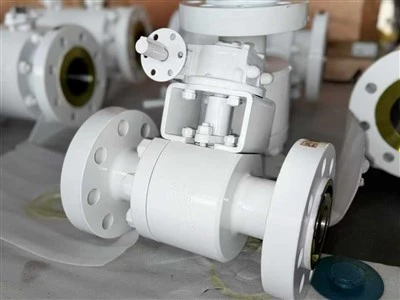
At the absolute heart of every standard ball valve is a solid, highly polished, perforated sphere-commonly referred to in the industry as the "ball"-suspended precisely between two matching, resilient seat rings housed securely inside the main valve body. A cylindrical bore or flow passage runs straight through the exact center of this sphere. A sturdy stem, connected directly to an external operating handle, a manual gear operator, or an automated pneumatic or electric actuator, engages securely with the top slot of the ball. When the valve is placed in the fully open position, this internal cylindrical bore aligns perfectly with the interior diameter of the pipeline, allowing liquid, gas, or slurry media to flow through with virtually unrestricted passage, minimal flow restriction, and an exceptionally low pressure drop.
Quarter-Turn Actuation and Rapid Response
Unlike traditional linear-motion valves, which require multiple full rotations of a handwheel to slowly raise or lower an internal gate, wedge, or plug, a ball valve operates on a rapid, highly efficient quarter-turn mechanism. By rotating the external handle or actuator precisely ninety degrees, the internal ball turns so that its solid, uninterrupted spherical surface completely blocks the cross-sectional area of the pipe, achieving a complete, positive, and absolute shut-off of the media. This swift ninety-degree actuation is particularly advantageous in emergency situations where rapid, decisive isolation of a hazardous fluid line is required to prevent environmental disasters or equipment destruction. Furthermore, because the operating torque required to turn the ball is relatively low compared to sliding-stem valves, ball valves are exceptionally well-suited for industrial automation, pairing effortlessly with pneumatic, electric, or hydraulic actuators for remote facility control and centralized plant management.
Key Advantages: Why They Lead the Quarter-Turn Market
While several competing types of quarter-turn valves exist in the global market-such as plug valves and butterfly valves-the ball valve consistently outperforms its mechanical rivals across several critical performance metrics, cementing its undisputed status as the most popular choice for demanding industrial applications worldwide.
Superior Sealing and Bubble-Tight Shut-Off Performance
One of the primary reasons engineers overwhelmingly specify a ball valve is its unmatched, proven ability to provide a consistent, bubble-tight seal under varying conditions. In traditional gate or globe valves, constant wear and tear on the sliding seating surfaces frequently leads to minor fluid leakage, wire-drawing, and erosion over time. In contrast, standard resilient-seated ball valves utilize high-performance soft sealing materials such as virgin PTFE (Teflon), RPTFE (reinforced polytetrafluoroethylene), or various specialized elastomeric polymers that press tightly and uniformly against the curved surface of the sphere. As system fluid pressure pushes against the upstream side of the ball, it forces the sphere slightly downstream into the downstream seat ring, creating a highly effective self-sealing effect where the tightness of the seal actually improves as operating pressure increases.
Exceptional Durability, Self-Wiping Action, and Low Maintenance
Ball valves are inherently rugged and resilient against challenging operating conditions. Because the continuous wiping action of the smooth ball against the resilient seats helps clear away minor particulate matter, scale, or debris during regular open-and-close cycles, these valves are significantly less susceptible to jamming, sticking, or fouling compared to traditional gate valves. Furthermore, they exhibit extraordinary resistance to mechanical wear over prolonged operational lifecycles. With fewer internal moving parts and robust material construction options-ranging from economical brass and bronze to heavy-duty carbon steel and exotic stainless steel alloys-a properly selected and well-maintained ball valve can deliver decades of reliable, leak-free service with minimal routine maintenance intervention, drastically reducing total cost of ownership for facility owners.
Structural Configurations: Trunnion vs. Floating Designs
As industrial applications grew progressively more rigorous over the decades-involving exponentially higher operating pressures, massive pipe diameters, and severe service environments-valve manufacturers engineered distinct structural configurations to ensure the ball valve could maintain peak performance without structural failure under extreme mechanical stress.
Floating Ball Valves
In a standard floating ball valve design, the spherical ball is not mechanically anchored or fixed at the bottom of the body; instead, it is held loosely and flexibly between two matching resilient seat rings. When the valve is placed in the closed position and high system pressure hits the upstream side of the ball, the hydraulic force pushes the entire ball slightly downstream. This movement forces the curved spherical surface firmly against the downstream seat ring, creating a tight, reliable mechanical seal. While highly effective, economically efficient, and structurally simple for small to medium-sized applications, traditional floating ball valves can experience significantly increased operating torque in very large pipe sizes or under exceptionally high pressure differentials, as the entire physical load of the fluid pressure is transferred directly onto the downstream seat.
Trunnion-Mounted Ball Valves
To successfully overcome the physical limitations of floating designs in large-scale, high-pressure industrial environments, expert engineers developed the trunnion-mounted ball valve. In this advanced configuration, the ball is securely anchored at both the top and the bottom by mechanical shafts known as trunnions, meaning the ball is physically constrained and cannot move downstream under pressure. Instead, the spring-loaded seat rings are pushed dynamically against the stationary ball to achieve a reliable seal. Because the heavy ball is fixed firmly in place, the operating torque required to turn the valve remains remarkably low even when handling massive fluid volumes under extreme system pressures. This makes trunnion-mounted valves the absolute preferred choice for high-pressure oil and gas transmission pipelines, large petrochemical refineries, power generation plants, and subsea installations where reliability is paramount.
Diverse Industrial Applications and Material Versatility
The true mark of a successful engineering component is its adaptability across a vast, heterogeneous array of operating environments. The ball valve excels in this regard, finding critical, irreplaceable applications across a massive spectrum of global industries.
Oil, Gas, and Petrochemical Processing
In the upstream exploration, midstream transportation, and downstream refining sectors of the global oil and gas industry, absolute safety, environmental compliance, and operational reliability are strict, non-negotiable requirements. Ball valves are heavily and routinely utilized in pipeline pigging stations, wellhead Christmas tree assemblies, high-pressure compressor units, and complex refinery processing units. Their unique ability to handle corrosive hydrocarbons, volatile sour gases, and abrasive elements safely under severe pressure makes them completely indispensable. To combat aggressive chemical attacks and sulfide stress cracking, manufacturers frequently utilize specialized high-alloy metals such as Inconel, Monel, Hastelloy, or titanium for these severe industrial service conditions.
Water Treatment, Municipal Utilities, and Chemical Manufacturing
Municipal water treatment facilities and regional distribution networks rely heavily on robust ball valves for chemical dosing skids, disinfection lines, neutralization units, and high-pressure water distribution mains. In specialized chemical manufacturing plants, where aggressive acids, caustic soda, chlorine, and toxic solvents are processed on a daily basis, industrial plastic ball valves constructed from PVC, CPVC, PVDF, or polypropylene offer exceptional chemical resistance at an economical price point, effectively preventing structural corrosion, external leakage, and dangerous fluid contamination.
Conclusion
The enduring, undisputed dominance of the ball valve in modern fluid engineering is a clear testament to its exceptional, time-tested mechanical design. By seamlessly combining the speed and convenience of quarter-turn operation with the absolute security of bubble-tight sealing, self-wiping durability, and versatile structural configurations, it successfully addresses the most critical, complex challenges faced by plant designers, pipeline engineers, and maintenance teams alike.
Whether deployed in a small commercial plumbing system, a municipal water treatment network, or a massive, high-pressure petrochemical processing plant, the engineered versatility of the ball valve ensures its continued status as the undisputed leader among all quarter-turn valve technologies. As material sciences advance, automated actuation becomes more sophisticated, and precision manufacturing techniques continue to evolve, these exceptionally reliable devices will unquestionably remain foundational to safe, efficient, and profitable industrial operations worldwide for generations to come.