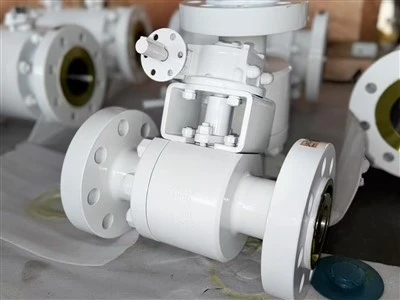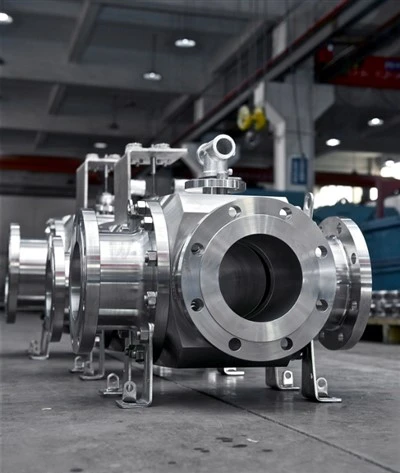

The Double Ball Valve features a floating ball structure and a soft-seal seat, enabling rapid opening and closing through 90° rotation. It is suitable for pipeline shut-off and isolation of water, oil, natural gas, air, and applicable chemical media.
Technical Specifications
|
Parameter |
Standard Specification |
Options |
|
Valve Type |
Soft Sealing Ball Valve |
Customized |
|
Structure |
Floating Ball, 2-Piece / 3-Piece |
Customized |
|
Nominal Size |
1/2"–12" / DN15–DN300 |
Up to DN600 |
|
Pressure Rating |
Class 150–300 / PN10–PN40 |
Class 600 / PN63 |
|
Body Material |
WCB / LCB / CF8 / CF8M |
Duplex / Super Duplex |
|
Ball Material |
SS304 / SS316 / SS316L |
Customized Alloy |
|
Stem Material |
SS410 / SS304 / SS316 |
17-4PH |
|
Seat Material |
PTFE / RPTFE / PEEK |
TFM / Devlon / Nylon |
|
Connection |
Flanged / Threaded / SW / BW |
RTJ / Customized |
|
Port |
Full Port |
Reduced Port |
|
Design Standard |
API 608 / ASME B16.34 / ISO 17292 |
BS 5351 / EN 12516 |
|
Face-to-Face |
ASME B16.10 / EN 558 |
DIN / JIS |
|
Testing Standard |
API 598 / ISO 5208 / EN 12266-1 |
Project Specification |
|
Fire-Safe |
API 607 / API 6FA / ISO 10497 |
Optional |
|
Fugitive Emission |
ISO 15848-1 / API 624 |
TA-Luft / VDI 2440 |
|
Operation |
Lever / Gearbox |
Pneumatic / Electric |
|
Media |
Water / Oil / Gas / Air / Chemical Media |
Customized |
Materials and Key Components
Valve Body and Ball: Valve bodies can be made of WCB, LCB, CF8, or CF8M. Balls can be made of SS304, SS316, SS316L, or alloy materials, selected based on media corrosivity and operating conditions.
Valve Seat: PTFE is suitable for general operating conditions; RPTFE offers better wear resistance and deformation resistance; PEEK is suitable for higher temperature and mechanical strength requirements.
Valve Stem and Packing: Valve stems can be made of SS410, SS304, or SS316, and can be configured with sealing materials such as PTFE and Graphite.

Quality Control
Raw Material Inspection: Verify materials, specifications, and MTC; stainless steel and alloy materials can be PMI tested as required.
Machining Inspection: Inspect the valve body, ball, stem, sealing surfaces, and connection dimensions. Key dimensions are controlled according to drawings and applicable standards.
Factory Testing: Perform Shell Test, Seat Leakage Test, and opening/closing checks. Test results are recorded in quality records.
Manufacturing and Supply
Factory Machining: Utilizing CNC and other equipment to machine valve bodies, balls, stems, and key mating surfaces, ensuring consistency across batches.
Bulk Supply: Supporting standard products, wholesale orders, and project orders. MOQ, capacity, and delivery time are confirmed based on specifications, materials, and quantity.
Spare Parts Supply: Providing commonly used spare parts such as valve seats, seals, and stems to support subsequent maintenance and repeat purchases.
Customization Capabilities
Specification Customization: Supporting customization of size, pressure rating, and face-to-face specifications.
Material Customization: Selecting body, ball, stem, and seat materials based on medium, temperature, and pressure.
Drive Customization: Supporting manual, pneumatic, and electric operation.
OEM and Documentation: Supporting customization of logos, nameplates, packaging, and project documentation. GA Drawings, MTC, Test Reports, and Inspection Reports are available.
Packaging and Export
Export Packaging: Plywood Case, Wooden Case, or Pallet will be used to protect valve ports, flanges, and sealing surfaces.
Rust and Moisture Protection: Rust, moisture, and long-distance transport protection will be provided depending on the mode of transport.
Export Documentation: Commercial Invoice, Packing List, Certificate of Origin, MTC, Inspection Report, and Test Certificate may be provided.
FAQ
Q: What is the difference between PTFE and RPTFE seats?
A: PTFE has good chemical compatibility; RPTFE improves abrasion resistance and deformation resistance through material reinforcement, and the specific choice depends on pressure, temperature, and medium.
Q: Can you provide fire-safe ball valves?
A: Fire-safe configurations compliant with API 607, API 6FA, or ISO 10497 can be provided according to product structure and project requirements.
Q: Can you provide fugitive emission documentation?
A: Relevant low-emission configurations and testing or documentation related to ISO 15848-1, API 624, or TA-Luft/VDI 2440 can be provided according to project requirements.
Q: What documents are available?
A: MTC, Pressure Test Report, Inspection Report, GA Drawing, and other technical documents required by the project can be provided.
Q: What information is required for quotation?
A: Please provide Valve Size, Pressure Rating, Medium, Temperature, Body Material, Seat Material, Connection, Actuation, Quantity, and Required Standard.
Q: What are the MOQ and lead time?
A: MOQ and lead time are determined based on product specifications, materials, quantity, and customization requirements. Standard products and project orders are evaluated separately.
Hot Tags: double ball valve, China double ball valve manufacturers, suppliers, factory